Essential Gear for the Grey Man: Top Products to Stay Safe from Hantavirus
- mstoffo
- May 8
- 9 min read
Hantavirus does not announce itself. You breathe it in, usually without knowing, and then the window for intervention closes fast. The CDC confirms that between 1993 and 2023, the United States recorded 890 laboratory-confirmed cases of Hantavirus Pulmonary Syndrome (HPS), with a fatality rate between 35% and 40%. In some strains, that number climbs to 50%. Those are not odds worth gambling with.
The grey man understands this. Staying invisible in a crowd matters. So does staying alive in the spaces most people never think twice about: a dusty storage shed, an abandoned cabin, a trail camp with a mouse problem. This guide breaks down exactly what to carry, why it works, and which products are worth your money.
How Hantavirus Actually Spreads
The primary transmission route is inhalation. When infected rodents (primarily the deer mouse in the U.S.) leave behind urine, droppings, or nesting material, those particles dry and become airborne the moment air moves through the space. You do not need to touch anything. You just need to breathe in the wrong place at the wrong time.
Over 94% of U.S. cases occur west of the Mississippi River. New Mexico, Colorado, and Arizona lead in confirmed cases. High-risk environments include:
Seasonally closed buildings like hunting cabins, barns, and storage sheds
Rural campsites near woodpiles, brush, or dense vegetation
Construction and agricultural sites in rodent-dense regions
Any enclosed space that has been unoccupied for weeks or months
The virus survives 2 to 3 days at room temperature on surfaces. Sunlight neutralizes it quickly outdoors. Inside, it waits.
The Andes Strain: When the Threat Becomes Human
Every hantavirus strain in North America shares one defining rule: the virus stops with the rodent. Humans get infected. Humans do not pass it on. The Andes orthohantavirus (ANDV), endemic to southern Argentina and Chile, breaks that rule entirely. It is the only hantavirus strain in the world with confirmed, documented person-to-person transmission. That distinction changes the threat model completely.
Where It Lives and Who It Affects
ANDV circulates primarily in Patagonia, with endemic zones across Neuquén, Río Negro, and Chubut provinces in Argentina, and a range stretching from the Atacama to the Magallanes regions of Chile. It is not a hypothetical risk for travelers. Argentina reported 101 infections between June 2025 and May 2026, double the prior year's caseload. In May 2026, a cluster of 9 cases and 3 deaths was linked to a single index case from Ushuaia who boarded the cruise ship MV Hondius.
The fatality rate for ANDV-induced HPS sits between 25% and 50%, consistent with the North American Sin Nombre strain. There is no approved antiviral treatment and no licensed vaccine for either.
How Person-to-Person Transmission Actually Works
ANDV transmission between humans occurs during the prodromal phase, the early symptomatic window before full cardiopulmonary collapse. The infected person does not look critically ill yet. They have a high fever, severe muscle aches (especially in the back and thighs), and gastrointestinal distress. No sore throat, no runny nose. It reads like a bad flu, which is exactly why it spreads.
Transmission routes include:
Respiratory droplets from coughing or close face-to-face conversation
Direct contact with saliva through kissing or sharing food and utensils
Prolonged close contact with a symptomatic person in an enclosed space
Viral RNA has been detected in blood up to two weeks before symptoms appear. The window is long, and the early presentation is deceptive.
The Epuyén Outbreak: A Case Study in How Fast It Moves
The 2018 to 2019 outbreak in Epuyén, Chubut Province, Argentina is the most extensively documented case of human-to-human ANDV transmission on record. A 68-year-old man contracted the virus through rodent exposure and attended a birthday party while in the early prodromal phase. Within hours, he infected five people. One of them contracted the virus after a brief encounter in a bathroom.
The chain continued. A secondary case hosted visitors while symptomatic and infected six more people. When that person died and their spouse attended the wake while already infected, ten additional cases resulted from a single crowded room. The final count: 34 confirmed cases, 11 deaths, a case fatality rate of 32%.
Before isolation protocols were enforced, the reproductive number (R0) reached 2.12. Once mandatory quarantine was applied to 142 contacts, it dropped to 0.96 and the outbreak ended. Isolation worked. But it had to be fast and it had to be enforced.
What This Means for Your Protective Posture
If you are operating in southern South America, particularly Patagonia, the threat model expands beyond rodent avoidance. An infected person in the early prodromal phase is a transmission vector. Standard rodent-exposure precautions remain essential, but they are no longer sufficient on their own.
The grey man adjustment for Andes-endemic regions:
Treat any unexplained fever with muscle aches and gastrointestinal symptoms in a local contact as a potential exposure event, especially in rural or Patagonian areas
Apply the same N95 or P100 respiratory protection in enclosed spaces with symptomatic individuals that you would use in a rodent-contaminated structure
Avoid sharing food, utensils, or drinks in high-risk regions during any active outbreak period
Maintain distance from individuals presenting with prodromal-phase symptoms: high fever, severe body aches, no upper respiratory involvement
If you suspect exposure, the incubation window runs from 7 to 42 days. Monitor for symptoms and seek medical evaluation immediately if fever develops
The Andes strain does not require a contaminated shed or a deer mouse trail. It can find you at a dinner table, a social gathering, or a crowded wake. The same kit that protects you from Sin Nombre in a Montana cabin will protect you from ANDV in Patagonia. The difference is knowing when to wear it.
The Grey Man Approach to Biological Hazards
The grey man does not carry a bright orange biohazard kit strapped to a tactical vest. The gear blends in. It lives in a plain daypack, a jacket pocket, or a small organizer pouch inside a civilian bag. Nothing signals "prepper." Nothing draws a second glance. But when it is needed, it performs at a clinical level.
Think of this as your quiet biological defense layer. The same philosophy that keeps you unnoticed in a crowd keeps you from standing out as someone who just walked through a rodent-contaminated space without protection.
What the Data Says You Actually Need
The CDC and OSHA are clear on the minimum requirements for hantavirus protection. Standard dust masks and surgical masks filter large particles. They do not filter viral aerosols. The bar starts at N95. For heavy contamination, it climbs to N100 or P100.
Beyond the respirator, the protocol requires gloves, eye protection to guard mucous membranes, and a wet decontamination method using a 10% bleach solution (1 part bleach to 9 parts water) before any material is disturbed or handled. Sweeping and vacuuming dry droppings is explicitly prohibited. It launches the virus into the air.
Here is what that translates to in practical carry gear.
Recommended Products
3M Aura 9205+ N95 Respirator

This is the baseline carry for any grey man operating in rural, agricultural, or wilderness environments. The 3M Aura 9205+ uses a tri-fold design that collapses flat for easy pocket or pouch storage and opens into a deep cup shape that creates a superior facial seal. It filters at least 95% of airborne particles, meeting NIOSH N95 standards.
For brief entries into potentially contaminated spaces, this respirator is the CDC-recommended minimum. It is widely available, unassuming in appearance, and takes up almost no space in a kit. Carry at least two. Use one and seal the other.
NIOSH N95 certified
Tri-fold, flat-pack design fits in any kit
Tight facial seal reduces bypass airflow
Widely available at hardware and safety retailers
3M 7502 Half-Face Respirator with 2091 P100 Filters

When the contamination level is unknown or clearly heavy, a reusable elastomeric half-face respirator with P100 filters is the right tool. The 3M 7502 paired with 2091 P100 bayonet-style filters provides 99.97% filtration efficiency, the highest available for particulate hazards.
This is the grey man's go-to for extended work in rodent-heavy structures: clearing out a rural storage shed, scouting an abandoned building, or setting up a remote base camp. The silicone face piece forms a tight seal and the filters snap on and off cleanly. Compact enough to live in a medium-sized daypack without consuming significant space.
P100 filters capture 99.97% of airborne particles
Reusable silicone facepiece with replaceable cartridges
Appropriate for heavy contamination or extended exposure risk
Used by professional pest control and remediation teams
Kimberly-Clark Purple Nitrile Exam Gloves

The CDC mandates gloves for any rodent cleanup. Nitrile is the best choice for field use: it resists punctures better than latex, requires no allergy considerations, and fits cleanly under work gloves if needed. Kimberly-Clark Purple Nitrile gloves are a medical-grade standard used in clinical and biohazard settings.
Pack a small roll of 4 to 6 gloves (two pairs) in a zip-lock bag inside your kit. They weigh almost nothing. Glove up before handling anything in a suspect environment, including doorknobs, latches, and surfaces in abandoned or rural structures.
Puncture-resistant nitrile construction
Medical-grade protection for direct contact hazards
Latex-free, no allergy risk
Compact enough to carry 2 pairs in any kit
Pyramex Safety I-Force Sporty Dual Pane Goggles
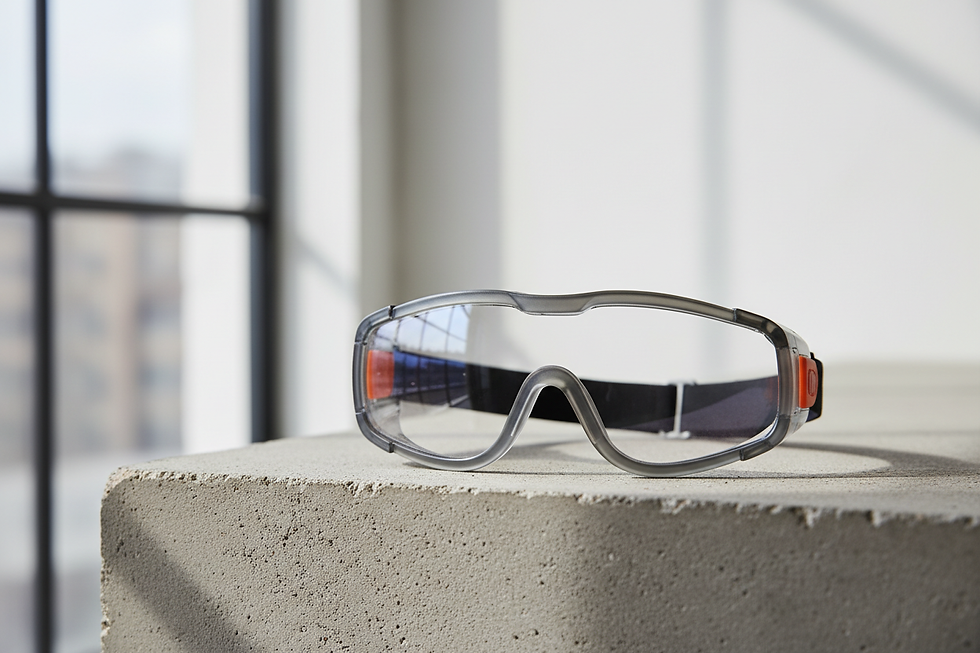
Hantavirus enters through mucous membranes. Eyes are a direct exposure route when disturbing contaminated material. Standard glasses do not seal the face. You need indirect-vent goggles that prevent aerosol infiltration around the edges.
The Pyramex I-Force dual-pane goggles are anti-fog, comfortable for extended wear, and low-profile enough to carry in a jacket pocket. They look like sport glasses from a distance, which fits the grey man aesthetic. When paired with an N95 or P100 respirator, they provide full facial mucous membrane protection as recommended by the CDC for high-risk cleanup.
Indirect-vent design blocks aerosol infiltration
Anti-fog dual pane lens for clear vision during cleanup
Slim profile stores flat in a pocket or kit pouch
Low-profile appearance, no tactical signaling
Disposable Tyvek Coveralls (DuPont Proshield or 3M 4510)

For any scenario involving heavy rodent infestation or extended time in a contaminated structure, the CDC recommends disposable coveralls. DuPont Proshield and 3M 4510 coveralls fold into a compact package roughly the size of a large paperback book. They go over your clothes, protect fabric from surface contamination, and get bagged and discarded after use.
This keeps viral particles from hitching a ride out of the contaminated space on your clothing. It also means your everyday clothes stay clean, which matters when you are returning to a populated area afterward. A single coverall weighs around 4 ounces and adds almost no bulk to a pack.
Recommended by CDC for heavy infestations and extended cleanup
Folds to paperback-book size, lightweight at roughly 4 ounces
Protects clothing from surface and aerosol contamination
Single-use, dispose after exposure in a sealed bag
Spray Bottle with Pre-Mixed 10% Bleach Solution
This is not a branded product. It is a protocol requirement. The CDC mandates that rodent droppings and contaminated surfaces be soaked with a 1:10 bleach solution for a minimum of 5 minutes before being disturbed or handled. This neutralizes the virus before it can become airborne.
A small 4 oz spray bottle filled with a pre-mixed solution fits in any pouch. Label it clearly. Use it before you touch anything. Spray, wait, then wipe. Never sweep or vacuum dry material. The spray bottle is the most overlooked item in hantavirus prevention and the one that matters most to the process.
1 part household bleach to 9 parts water, pre-mixed
Apply to all droppings and surfaces before disturbing them
Wait 5 minutes minimum before wiping or handling
Eliminates the primary aerosol risk at the source
Building the Kit: What It Looks Like in Practice
The full kit fits inside a single medium organizer pouch or a small dry bag: two N95 respirators (or one P100 half-face unit), two pairs of nitrile gloves, one pair of safety goggles, one folded Tyvek coverall, and one small spray bottle of bleach solution. Total weight is under 12 ounces. Total cost sits between $40 and $80 depending on the respirator you choose.
It does not look like anything. It does not signal anything. It lives in your pack the same way a basic trauma kit does: invisible until the moment it is the only thing that matters.
Before entering any suspected rodent environment, the protocol is simple:
Open windows and doors. Ventilate for at least 30 minutes before entry.
Put on gloves, goggles, respirator, and coveralls before crossing the threshold.
Spray all visible droppings and contaminated material with bleach solution. Wait 5 minutes.
Wipe using damp cloths or paper towels. Never sweep or vacuum.
Double-bag all waste including used PPE. Seal and dispose properly.
The Takeaway
Hantavirus is rare, but when it finds you, the margin for error is close to zero. A 35% to 40% fatality rate in confirmed U.S. cases is not a statistic to read and forget. It is a reason to carry a small pouch that costs less than a tank of gas and weighs less than a paperback novel.
The grey man does not prepare loudly. No patches, no tactical gear, no signaling. Just quiet competence built from solid information and the right tools carried in the right way. Hantavirus does not care how you look. It cares whether you were prepared when you walked through that door.
Your gear does not have to look dangerous to be dangerous.


Comments