How to Choose the Right Tactical Training Course and Avoid Scams
- mstoffo
- May 21
- 5 min read
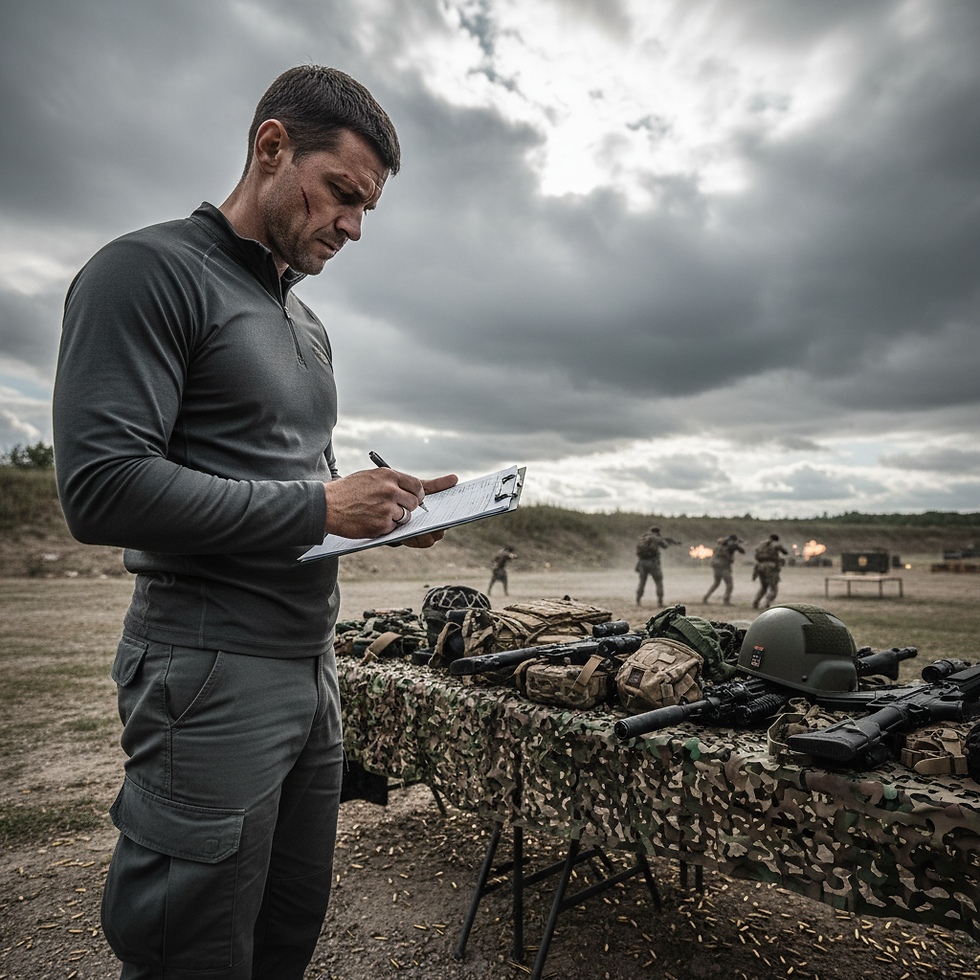
The tactical training industry is booming. That is mostly a good thing. More people are taking personal safety seriously, and there are genuinely excellent instructors and programs out there. But growth attracts grifters, and right now the space is crowded with weekend warriors turned "operators," online-only concealed carry mills, and YouTube personalities whose credentials begin and end with a camera.
Before you spend money or vacation days on a course, you need a process. Here is how a greyman thinks about choosing training.
The Landscape: What Kinds of Training Are Out There?
The training world breaks into several broad categories. Each one has legitimate providers and plenty of noise.
Shooting schools cover defensive pistol, carbine, low-light shooting, force-on-force, and precision rifle. Schools like Gunsite Academy and Thunder Ranch have been producing competent shooters for decades. These are the gold standard examples, not endorsements to skip your own research.
Tactical medical and TCCC covers tourniquet application, wound packing, airway management, and shock treatment. Providers like Dark Angel Medical and SOARescue offer NAEMT-accredited Tactical Combat Casualty Care. This is some of the highest-value training a civilian can get, full stop.
CPR and first aid sounds basic, because it is. That is exactly why most people skip it. The American Heart Association and Red Cross certifications are standardized, inexpensive, and provably useful. Get current and stay current.
Active shooter response runs the spectrum from useful (ALERRT, taught in schools and workplaces) to theatrical (ninja rolling and "tactical breathing" from someone with no verifiable background).
Executive protection is a professional discipline with real curriculum, covered by established programs like the Executive Protection Institute and Executive Security International. It is not just driving fast and wearing suits.
Lockpicking and covert entry are niche but valuable for understanding physical security vulnerabilities. Legitimate courses from organizations like L.O.C.T. Associates are often restricted to law enforcement and military. If a course is open to anyone with a credit card and claims to make you a "covert entry specialist" in a weekend, be skeptical.
Tactical tracking covers reading terrain, identifying movement patterns, and following a trail. Primitive skills combined with modern context. Legitimate curriculum exists but the field has fewer standardized credentials, so instructor vetting matters even more.
The Free Course Problem
Concealed carry insurance companies, including well-known names, often offer free or deeply discounted online courses as a marketing funnel. The goal is your monthly subscription, not your skill development. That does not make the content worthless, but you need to understand what you are actually getting.
The real problem is online-only concealed carry certification that never puts a gun in your hand. You watch videos, click through quiz questions, and receive a certificate. Several states do not recognize these for permit purposes. More importantly, watching someone draw from a holster is not the same as drawing from a holster under even mild pressure. A certificate that required zero live-fire is worth roughly zero in a real situation.
Some of these platforms have also been flagged for misleading reciprocity claims, telling buyers their certificate is valid in most of the country when many states have specifically closed that loophole. Read the fine print before you assume you are legally covered anywhere.

How to Verify an Instructor
This is where most people skip steps they should not. Verifying an instructor takes thirty minutes and can save you real money and genuine safety risk from learning bad habits or dangerous techniques.
Ask for a resume or bio, then verify it. A legitimate instructor will have one. Military service can be partially verified through the National Personnel Records Center. Anyone claiming special operations background who stonewalls every verification attempt with "it's classified" is a red flag. Real SOF veterans are usually the least theatrical people in the room.
Check NRA instructor status. The NRA maintains a public verification portal at nrainstructors.org. You can search by name and instructor ID. It does not cover every discipline or every legitimate instructor, but it is a fast baseline check for firearms courses.
Look for law enforcement or POST certification. Many states publish Peace Officer Standards and Training (POST) records. If an instructor claims a law enforcement background, their certification history is often searchable through state agencies. This takes five minutes.
Search for student reviews outside the instructor's own platforms. Google reviews, Reddit threads (r/CCW, r/firearms, r/tacticalmedicine), and firearms forums like Pistol-Forum.com carry honest feedback. Look for patterns, not one-off complaints.
Verify certificate numbers when available. Reputable training organizations often have digital portals where you can input a certificate number and confirm it is real. NAEMT certifications, NRA credentials, and state-licensed security training can all be checked this way.
Ask who trained the instructor. Legitimate instructors have their own training lineage. They will tell you where they learned, who their mentors were, and what courses they continue to take. An instructor who stopped learning the day they got their first certification is behind the curve.
Red Flags That Should End the Conversation
Tactical clothing, patches, and gear as a substitute for a verifiable resume
Courses that are almost entirely classroom or video-based with no skills assessment
Instructors who cannot explain the "why" behind what they teach, only the "what"
Techniques that only work in movies: spinning draws, shooting from the hip at distance, dual-wielding as a serious defensive tactic
No certificate of liability insurance for the range or training facility
Pressure to buy merchandise, ammunition, or "upgrade packages" before the course even starts
Claims of classified backgrounds that conveniently prevent any verification

How the Greyman Picks a Course
The greyman framework applies as much to training selection as it does to everyday behavior: low ego, high awareness, practical focus.
Most people gravitate toward training they are already good at. Shooters take more shooting courses. People who like the outdoors take more wilderness survival. That is natural and also backwards. The correct approach is to train the gaps, not the strengths.
Ask yourself honestly: what would actually happen if someone in my household had a cardiac event right now? What would I do if I witnessed a mass casualty incident? Do I know how to stop serious bleeding? Most people have taken zero tactical medical training. That is a gap worth closing before spending another weekend on shooting fundamentals you already have.
The greyman also avoids the status-seeking version of training. A course is not a patch on a bag or a name to drop in conversation. It is a skill set you either have or you do not. Pick courses for usefulness, not impressiveness.
A practical training priority order for most civilians looks like this: current CPR and first aid certification, basic tactical medical (tourniquet, wound packing, airway), solid defensive firearms fundamentals, situational awareness and de-escalation, and then specialty skills based on your actual environment and lifestyle.
The Bottom Line
There is no shortage of people willing to take your money for training that feels impressive but builds nothing real. The best protection is thirty minutes of research before you register for anything. Verify the instructor, read independent reviews, make sure the curriculum involves actual skill-building under some form of stress or assessment, and choose based on your gaps rather than your interests.
Good training is not cheap, and it should not be. But it is an investment with a clear return. A certificate from a course that never tested you is just paper.
You dont have to look dangerous to be dangerous.


Comments