Navigating Modern Health Challenges: A Grey Person's Guide to Preparing for Veggie-Induced Issues and Tick-Borne Diseases
- mstoffo
- 15 hours ago
- 12 min read
HEALTH PREPAREDNESS REPORT · 2025–2026
Parasites, Outbreaks & Tick Diseases
What every prepared person needs to know right now, and what to do about it.
Sources: CDC, WHO, U.S. State Health Departments, peer-reviewed literature · Updated July 2026
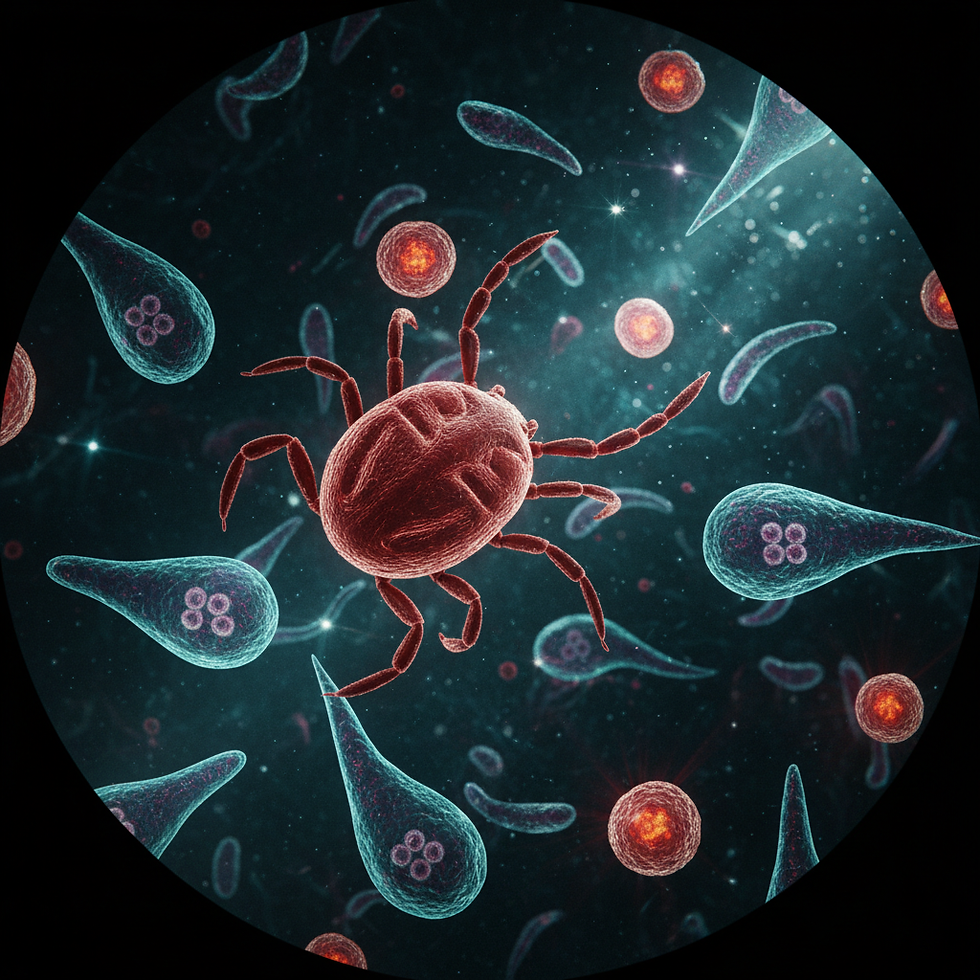
Part 1: The Diarrheal Disease Threat
Three pathogens are currently driving the most significant gastrointestinal illness burden in the United States. Each one behaves differently, spreads differently, and requires a different response. Knowing which you are dealing with matters.
Norovirus: The Explosive One
Norovirus is the most contagious non-bacterial agent on the planet. The 2024–2025 season was severe. The CDC recorded 495 outbreaks between August and December 2024 alone, a 36% jump over the same period in 2023. Test positivity hit 22% in late December 2024, nearly double the prior year. A new dominant strain, GII.17, drove 69.7% of genotyped outbreaks.
Symptoms arrive fast: violent vomiting and watery diarrhea within 12–48 hours of exposure, accompanied by cramping, nausea, and low-grade fever. Most people recover in 1–3 days. The danger is dehydration, especially in the elderly, young children, and anyone already weakened.
How it spreads: Contaminated surfaces, infected food handlers, shellfish (a January 2025 outbreak was linked to oysters from Washington State), and person-to-person contact. As few as 18 viral particles can cause infection.
Key Fact
Alcohol-based hand sanitizers do NOT reliably kill norovirus. Soap and water is the only effective hand hygiene option.
Treatment
No antiviral exists. Aggressive oral rehydration with electrolyte solutions (ORS) is the treatment. Prevent dehydration at all costs.
Surface Kill
Bleach-based disinfectants (5.25–8.25% sodium hypochlorite) are required. Most commercial sprays are NOT effective against norovirus.
Cyclospora: The Parasite in Your Produce
Cyclospora cayetanensis is a single-celled parasite transmitted almost exclusively through contaminated fresh produce: basil, cilantro, berries, lettuce, and snap peas are repeat offenders. The 2025 season recorded 990 domestically acquired cases across 37 states with 93 hospitalizations. The 2026 season is already running hotter, with Michigan reporting 170+ cases in June alone, more than triple its entire 2025 total.
What makes Cyclospora dangerous is its delay. Symptoms begin 1–2 weeks after exposure and include watery, explosive, and sometimes projectile diarrhea that cycles on and off for weeks or months if untreated. Profound fatigue, loss of appetite, and weight loss accompany the diarrhea. Many people have no idea they consumed a parasite.
Critical point: Cyclospora oocysts are NOT killed by standard chlorine levels in tap water or by alcohol-based sanitizers. Washing produce with water reduces but does not eliminate risk. Cooking produce to 140°F (60°C) for at least 1 minute does kill the parasite.
Treatment: Trimethoprim-sulfamethoxazole (TMP-SMX, brand name Bactrim or Septra) is the only proven effective antibiotic. This requires a prescription. There is no reliable OTC treatment.
Cryptosporidium: The Waterborne Surge
Cryptosporidium ("Crypto") is estimated to cause roughly 823,000 infections per year in the U.S., though fewer than 2% are ever officially reported. Official CDC data shows a 40.7% case increase from 2021 to 2022. In 2024, there were 32 documented outbreaks affecting over 1,500 people. The primary vectors are swimming pools, splash pads, and contaminated drinking water.
Crypto is notoriously hard to kill. It resists standard chlorine disinfection. Only UV light treatment, ozone, or boiling reliably destroys it. A water filter rated at 1 micron absolute or smaller (NSF Standard 53 or 58 certified) is required for physical removal.
Symptoms: watery diarrhea lasting 2–3 weeks, stomach cramps, nausea, and low-grade fever. In people with compromised immune systems, the infection can become life-threatening.
Treatment: Nitazoxanide (Alinia) is the only FDA-approved treatment for Cryptosporidium and requires a prescription. No OTC treatment is effective.
Part 2: Tick-Borne Disease, the Expanding Threat Map

Tick season is getting longer, ticks are spreading into new regions, and they are now carrying more diseases simultaneously. Emergency department visits for tick bites in 2025 reached their highest level since 2017. This is not a regional problem anymore.
Lyme Disease: Bigger Numbers, Bigger Geography
Lyme disease, caused by Borrelia burgdorferi and transmitted by the black-legged (deer) tick, remains the most common vector-borne disease in North America. The CDC treats approximately 476,000 people per year for Lyme disease in the U.S. Reported cases surpassed 89,000 in 2023. Maine broke its own case record in 2025 with 3,600+ confirmed cases, its third consecutive record year. New York reported 18,704 cases in 2024. Canada recorded a record 7,105 cases in 2025, up from 5,809 the year before.
Early Lyme is treatable with doxycycline (21-day course) if caught quickly. The famous "bull's-eye" rash (erythema migrans) appears in roughly 70% of cases. The other 30% show no rash at all, making early detection harder. Untreated Lyme progresses to joint pain, neurological symptoms, heart rhythm problems, and debilitating fatigue that can persist for years.
Powassan Virus: The Fast Killer
Powassan is rare but its trajectory is alarming. Cases rose from 7 in 2015 to 76 in 2025. It is transmitted by the same black-legged tick that carries Lyme, but Powassan can be transmitted in as little as 15 minutes of attachment, compared to 24–36 hours for Lyme. There is no treatment, no vaccine, and no cure. Roughly 10% of neuroinvasive cases are fatal. About half of survivors suffer permanent neurological damage: memory problems, recurring headaches, and muscle weakness.
In May 2026, New York confirmed its first-ever Bourbon Virus case in a Long Island resident, a virus previously confined to the Midwest and South. The virus is expanding its range northward.
Rocky Mountain Spotted Fever (RMSF): The Deadliest Tick Disease
RMSF kills fast. A Tecate, Mexico outbreak cluster from July 2023 through January 2024 had a 50% fatality rate among U.S. travelers. Northern Mexico, particularly Baja California, Sonora, and Chihuahua, sees case fatality rates exceeding 40%. RMSF is caused by Rickettsia rickettsii and is transmitted by the American dog tick and Rocky Mountain wood tick.
The window for effective treatment is narrow. Doxycycline must be started immediately, before laboratory confirmation. A rash appears on days 2–5 (often starting on wrists and ankles), but by the time severe symptoms appear, survival odds drop significantly.
Emerging Threats You Have Not Heard Of
Alpha-Gal Syndrome (AGS)
A Lone Star tick bite can trigger a permanent allergy to red meat and some dairy products. An estimated 450,000+ Americans are affected. Seroprevalence in Arkansas reaches 31.2% and Missouri 26%. As the Lone Star tick expands into the Northeast, this condition is following it. Reactions range from hives to full anaphylaxis and can occur 2–6 hours after eating mammalian meat.
Asian Longhorned Tick
Now established in 21 states, this invasive tick reproduces without a mate, meaning populations explode rapidly. In May 2025, researchers confirmed it can carry Ehrlichia chaffeensis, the pathogen responsible for Ehrlichiosis. Co-infections are a growing problem: studies in 2026 show roughly 10% of nymph-stage black-legged ticks now carry multiple pathogens simultaneously.
Part 3: Other Parasitic Threats to Watch
Giardia
One of the most common intestinal parasites in the U.S. Found in contaminated streams, lakes, and municipal water during flooding. Symptoms: foul-smelling greasy diarrhea, gas, and bloating lasting weeks. Treatment: Metronidazole (Flagyl), prescription only. Water filters must be 1 micron absolute or smaller.
Pinworms
Extremely common, especially in households with children. Itching around the anus, particularly at night, is the hallmark. This is the one parasite with an effective OTC treatment: Pyrantel Pamoate (Pin-X, Reese's Pinworm Medicine). A single dose, repeated in 2 weeks, is the standard protocol. Treat all household members simultaneously.
New World Screwworm
Not yet a widespread human threat in the U.S., but a USDA-confirmed animal case appeared in Zavala County, Texas in June 2026, the first domestic case in decades. One travel-associated human case was confirmed in August 2025 from a traveler returning from El Salvador. This fly larva burrows into living tissue. Monitor USDA alerts if you live near the southern border.
Part 4: What the Prepared Person Does
The "grey person" concept is about being quietly prepared without drawing attention. The goal is to handle illness, exposure, and contamination events with supplies already on hand, reducing dependence on emergency infrastructure that may be overwhelmed during an outbreak. Here is how to build that capability.

Tick Prevention: Layer Your Defense
Permethrin-treated clothing: Apply permethrin (0.5% solution) to clothing, boots, and gear. It kills ticks on contact and remains effective through multiple washes. Do not apply directly to skin. Pre-treated clothing (Insect Shield brand) is an option.
DEET on skin: 20–30% DEET on exposed skin provides solid protection. Picaridin (20%) is an equally effective, less oily alternative. IR3535 is a third option. Reapply every 4–6 hours in the field.
Tick checks: Check within 2 hours of returning from outdoors. Focus on scalp, behind ears, neck, armpits, groin, and behind knees. Showering within 2 hours after outdoor exposure significantly reduces tick attachment risk.
Proper removal: Use fine-tipped tweezers. Grasp as close to the skin surface as possible. Pull upward with steady, even pressure. Never twist, crush, or apply petroleum jelly, nail polish, or heat. Clean the bite area with rubbing alcohol. Save the tick in a sealed bag with the date for identification if illness develops.
Clothing management: After outdoor exposure, put clothes directly into a dryer on high heat for 10 minutes before washing. Heat kills ticks; cold water does not.
Water Safety: Never Assume
Boiling: Brings water to a full rolling boil for 1 minute (3 minutes above 6,500 feet). Kills all biological threats including Cryptosporidium and Giardia. The gold standard for emergencies.
Filtration: Use a filter rated at 1 micron absolute (NSF Standard 53 or 58) to remove Cryptosporidium and Giardia. Sawyer Squeeze, Katadyn BeFree, and Berkey with black filters are all proven options. Note that filters do not remove viruses — combine with chemical treatment for full protection.
Chemical treatment: Sodium hypochlorite bleach (5.25–8.25%) at 8 drops per gallon kills bacteria and most viruses but NOT Crypto or Giardia. Aquatabs (sodium dichloroisocyanurate) are more stable for storage. Always filter turbid water before chemical treatment.
Optimal combination: Filter first (removes protozoa and sediment) then treat with chemical disinfectant (kills bacteria and viruses). This two-step approach handles all biological threats.
Food Safety During Outbreaks
Wash all fresh produce under running water, then soak in a solution of 1 tablespoon white vinegar per cup of water for 5 minutes. This does not eliminate Cyclospora but reduces surface load.
During active Cyclospora outbreak alerts, cook all leafy greens and herbs or avoid them entirely.
Avoid raw shellfish during norovirus season (October through April). Cooking shellfish to an internal temperature of 145°F (63°C) kills norovirus.
If you develop Alpha-Gal Syndrome, carry an epinephrine auto-injector (EpiPen). Reactions can occur hours after eating mammalian meat, making the connection easy to miss.
Part 5: Your Preparedness Supply List
This is what a well-prepared household should have on hand. Items are organized by category with reasoning included. This list is informational. Consult a physician before using prescription medications. This content does not constitute medical advice.
Hydration and GI Recovery
Item | Why You Need It | Notes |
|---|---|---|
Oral Rehydration Salts (ORS) | WHO-formula ORS (Pedialyte, DripDrop, or powder packets) replaces sodium, potassium, and glucose lost to diarrhea and vomiting far more effectively than water or sports drinks alone. | Stock 48–72 hour supply per person |
Loperamide (Imodium) | Slows GI motility to reduce acute diarrhea. Useful for managing symptoms but should NOT be used if you suspect a bacterial or parasitic infection with fever, as slowing the gut can worsen those conditions. | OTC. Use with caution. |
Bismuth Subsalicylate (Pepto-Bismol) | Anti-nausea and mild antibacterial properties. Useful for traveler's diarrhea and mild gastroenteritis. Tablets are more portable and shelf-stable than liquid. | OTC. Avoid in children under 12. |
Activated Charcoal | Binds toxins in the gut in cases of suspected food poisoning or ingested toxins. Limited but real utility in the first 1–2 hours of exposure. Not effective against viral or parasitic illness. | OTC. Consult a doctor first if possible. |
Parasite Treatment
Item | Why You Need It | Notes |
|---|---|---|
Pyrantel Pamoate (Pin-X, Reese's Pinworm Medicine) | The only OTC anthelmintic available in the U.S. Effective for pinworms and roundworms. Take a second dose 2 weeks after the first to kill newly hatched worms. Treat all household members at the same time. | OTC. Dose: 11 mg/kg, max 1g |
Albendazole (prescription) | Broad-spectrum antiparasitic effective against a wide range of worms including tapeworms, hookworms, and roundworms. Preparedness kits such as the Jase Case include this medication. Far broader coverage than Pyrantel Pamoate. | Rx only. Ask your physician. |
Ivermectin (prescription) | Effective against a range of external and internal parasites including strongyloides, scabies, and head lice. Included in many preparedness medical kits. Requires physician prescription and guidance on dosing. | Rx only. Human formulation only. |
Tick Disease Response
Item | Why You Need It | Notes |
|---|---|---|
Fine-tipped tweezers | The correct tool for safe tick removal. Pointed-tip tweezers (not flat) allow you to grasp the tick as close to the skin surface as possible without crushing the body, which can inject pathogens into the wound. | Keep one in every first aid kit |
Tick ID card or app | Knowing which tick species bit you tells you which diseases to watch for. TickEncounter (University of Rhode Island) offers a free online ID tool. The TickCheck app allows you to photograph and submit a tick for professional ID. | Free resource |
Doxycycline (prescription) | The front-line antibiotic for Lyme disease, RMSF, Anaplasmosis, and Ehrlichiosis. A single prophylactic 200mg dose within 72 hours of a confirmed deer tick bite reduces Lyme disease risk by 87%. Also the first-line treatment for RMSF — delay is deadly. | Rx only. Discuss with your physician. |
Sealed zip-lock bags | Save removed ticks alive in a sealed bag with a damp cotton ball and note the date. If you develop symptoms, the tick can be sent for pathogen testing. TickCheck.com offers mail-in testing services. | Low cost, high value |
Prevention and Sanitation
Item | Why You Need It | Notes |
|---|---|---|
Permethrin spray (0.5%) | Treats clothing, boots, and gear. Kills ticks and mosquitoes on contact. One treatment lasts through 6 washes. Sawyer Products Permethrin is the leading brand. Do not apply to skin. | OTC. Highly effective. |
DEET or Picaridin repellent | 20–30% DEET or 20% Picaridin for skin application. Provides 4–8 hours of protection against ticks and mosquitoes. Picaridin does not damage synthetics, plastics, or gear and is preferred for frequent use. | OTC. Reapply as directed. |
Household bleach (unscented) | 5.25–8.25% sodium hypochlorite is required to disinfect surfaces after norovirus exposure. Standard disinfectant sprays often do not work against norovirus. Mix 1/3 cup bleach per gallon of water for surfaces. Also used for emergency water treatment. | OTC. Replace every 6–12 months. |
Water filter (1 micron absolute or smaller) | Removes Cryptosporidium, Giardia, and sediment from water. NSF 53 or 58 certified filters meet this standard. Sawyer Squeeze, Katadyn BeFree, and Berkey with black filters are reliable choices. Does not remove viruses alone — pair with chemical disinfectant. | One-time purchase. Test regularly. |
Nitrile gloves (box of 100) | Essential for handling an ill person, cleaning up vomit or feces, and preventing norovirus contact transmission. Gloves should be disposed of after each use. Wash hands with soap and water after glove removal. | OTC. Keep multiple boxes. |
N95 respirators | While most GI pathogens do not spread through the air, vomiting generates aerosols that can carry norovirus particles. An N95 mask worn by a caregiver during cleaning reduces inhalation risk significantly. | Keep a small supply on hand. |
Part 6: The Grey Person Framework
The grey person does not react to outbreaks. They were already prepared before the outbreak made the news. Here is how that looks in practice.
Know the local threat calendar
Cyclospora peaks May through August. Norovirus peaks October through April. Tick season runs March through November in most of the U.S. but year-round in southern states. Cryptosporidium spikes in summer at recreational water facilities. Sign up for your state health department's outbreak alert emails and check the CDC outbreak notice page monthly. Being 2–3 weeks ahead of the news cycle is the difference between a prepared household and a scrambling one.
Build a relationship with a physician who thinks ahead
Several prescription items in this guide require a physician. A prepared person has an ongoing relationship with a doctor who understands preparedness medicine. Services like Jase Medical, Wilderness Medical kits, and direct primary care (DPC) physicians allow proactive prescriptions for antibiotics and antiparasitic medications to be kept on hand for emergency use. This is legal, ethical, and increasingly common among prepared households. Have an honest conversation with your provider about your preparedness goals.
Rotate, store, and know your supplies
Supplies you cannot find, cannot access, or that have expired are worthless. Keep a simple spreadsheet of everything in your medical kit with purchase dates and expiration dates. Audit twice a year. Store medications in a cool, dry location away from light. Bleach degrades in 6–12 months — date your bottles. ORS packets last 2–3 years sealed. Water filters have stated lifespans in gallons, not years, so track usage. A laminated quick-reference card listing what each item is for and its dose belongs in every medical kit.
Practice the basics until they are automatic
Handwashing with soap for 20 seconds removes parasite eggs, bacteria, and most viruses. Proper tick checks take 3 minutes and catch 90% of attached ticks before they have transferred pathogens. These habits cost nothing and prevent more illness than any kit. Practice doing a full-body tick check on yourself and your family members so it becomes routine after any outdoor activity. Know exactly how to remove a tick correctly before you ever need to — a panicked, rushed removal is how pathogens get pushed into the wound.
Recognize when to go to a hospital
Preparedness does not replace emergency medicine. Go immediately to an emergency room if you experience: high fever (above 103°F/39.4°C) combined with rash, inability to keep any fluids down for more than 12 hours, signs of severe dehydration (no urination for 8+ hours, extreme dizziness, sunken eyes), sudden severe neurological symptoms (confusion, severe headache, light sensitivity, weakness) following a tick bite, or any symptom in a child under 2 or an immunocompromised person that seems to be worsening. Speed matters most with RMSF and Powassan virus. Those are hours-matter diseases.
A Final Word
The threats covered in this guide are not theoretical. Cyclospora is spreading in 37 states right now. Tick-borne diseases are hitting record numbers across North America. Norovirus surged 36% in one season. Powassan virus is expanding northward. These are documented, data-backed realities.
The good news is that most of these threats are manageable with knowledge, modest preparation, and consistent habits. The grey person does not panic when an outbreak makes headlines. They quietly handle it with what they already have in place.
Know the threats. Build the kit. Practice the habits. Have the physician relationship. That is the entire framework.
Disclaimer: This document is for general informational and educational purposes only. It does not constitute medical advice, diagnosis, or treatment. All data is sourced from CDC, WHO, and peer-reviewed public health literature current as of July 2026. Consult a qualified physician before using any medication, including over-the-counter products, especially if you have underlying health conditions or are treating children. In an emergency, call 911 or go to the nearest emergency room.
You dont have to look dangerous to be dangerous.


Comments